Your Puppy’s First Week: Build Safety First
Do not rush into commands. First help your puppy understand where to rest, when food arrives and who keeps them safe.
Read article →LEARN WITH YOUR DOG
Every article begins with observation, then explains safe practice, how to adjust difficulty and when professional help is appropriate.
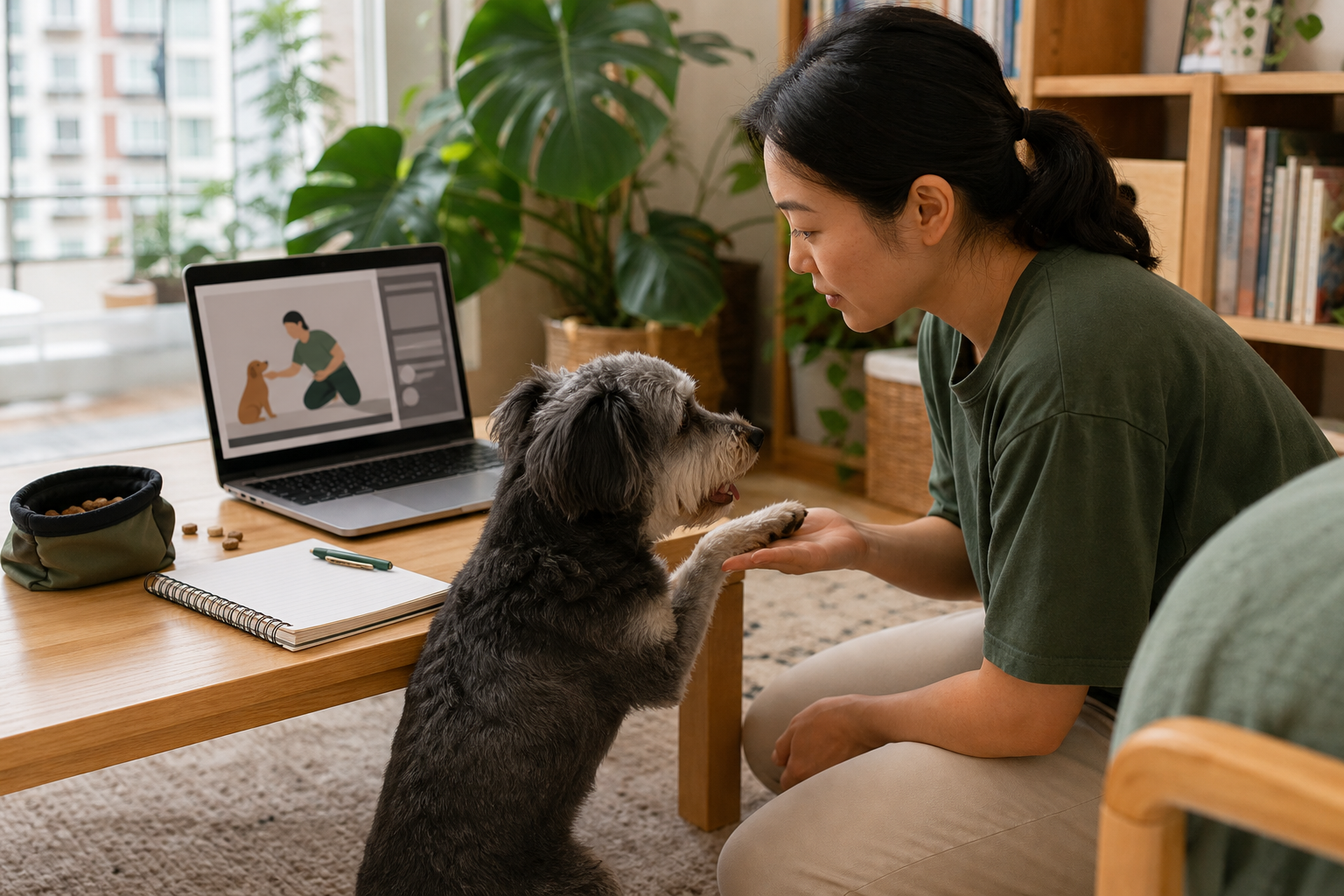
Start with environment, routine and relationship to build a strong foundation.
Do not rush into commands. First help your puppy understand where to rest, when food arrives and who keeps them safe.
Read article →Success comes from prediction, timely access and reinforcement—not correcting accidents afterwards.
Read article →Mouthing may reflect exploration, teething, play or fatigue. The response depends on the puppy’s state.
Read article →Learn to observe body language and emotion, and understand why behaviour happens.
The earlier you notice discomfort, the sooner you can lower difficulty and prevent training from becoming coercive or confrontational.
Read article →Food, toys, sniffing, distance and social access can all reinforce behaviour—if the dog values them then.
Read article →Breed tendencies help predict motivation and challenges; the individual determines the actual plan.
Read article →Bring attention, recall, waiting and cooperative care into everyday life.
Repeating cues when the dog is not ready to learn only makes the words less meaningful.
Read article →Every successful return should make choosing the guardian worthwhile.
Read article →Nail care, brushing and ear checks can begin with brief, voluntary participation.
Read article →Understand causes and risk before planning management and gradual training.
Alarm, fear, excitement, requests and learned barking require different plans.
Read article →Once over threshold, a dog struggles to learn new choices. Safe distance is part of training.
Read article →Video helps distinguish brief frustration, environmental triggers, boredom and possible separation-related distress.
Read article →Local guidance for apartments, lifts, tropical weather and city life.
Singapore’s blind corners, lift doors and narrow corridors require observation and an exit plan.
Read article →In Singapore, timing, ground temperature and recovery must be part of every plan.
Read article →Jet noise can build rapidly. Closing windows early, scattering food before the peak and responding naturally may help more than reacting afterwards.
Read article →Understand how pain, sleep and activity affect learning.
Touch sensitivity, irritability, sleep changes and reduced movement may be linked to discomfort.
Read article →Rest affects emotional recovery, memory and tolerance of stimulation, especially in puppies and adolescents.
Read article →Physical activity, sniffing, problem-solving and recovery need balance.
Read article →Use records, plans and family teamwork to make training sustainable.
Environment, distance and recovery tell you more than simply writing ‘successful today’.
Read article →Consistency is not severity; it makes cues, boundaries and reinforcement predictable.
Read article →A good plan helps the dog succeed and lets the guardian see a path forward.
Read article →PARTNER CLASSROOM · ONLINE
Read Your Dog is a free starter for guardians new to friendly training. Puppy Beginnings organises common challenges by life stage and includes human Q&A at key points. Learn and practise at your own pace.
Twelve free lessons of about five minutes follow the path from understanding to communication and daily life, introducing our training approach with a reflection after every lesson.
A structured path from pre-arrival preparation to toileting, mouthing, alone time, socialisation and Singapore city living, with human Q&A at key stages.
不知道该选择哪一种帮助?